10 EIQ_AI Software Prototype Completed
The purposes of creation are as follows:
1. To simulate fluctuations in shipping volume based on existing data, without requiring additional shipping data.
2. To operate on a local PC to maintain the confidentiality of shipping data, allowing operators to use it easily whenever needed.
3. To serve as an example of logistics AI, allowing users to learn software content and procedures using actual shipping data.
This EIQ_AI software will be released to the public free of charge as a final version after being used as a prototype version in universities.
1) Deletion and Addition Logic from Shipping Data
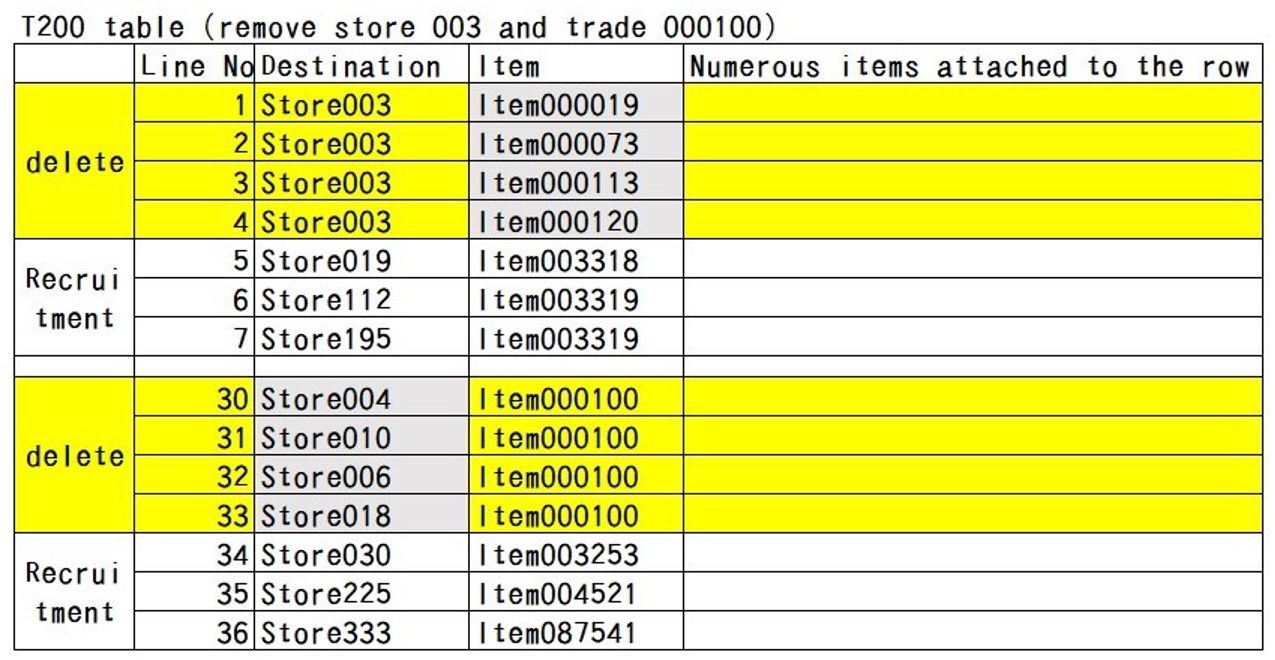
Changes in aggregation due to the increase or decrease in the number of destinations (E) and items (I) are fractal. In other words, just as a ginkgo leaf retains its characteristic shape regardless of how its size changes.If shipping destination "Store 003" is removed, the record for "Store 003" disappears. Likewise, if item "Item 000100" is removed, the record for "Item 000100" disappears.
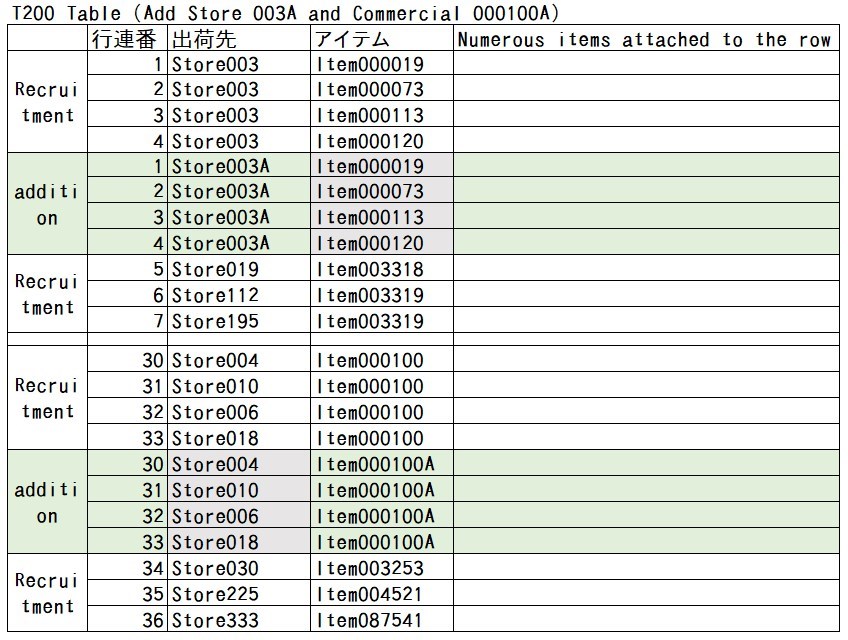
Conversely, if a shipping destination "Store 003A" equivalent to "Store 003" is added, a record equivalent to "Store 003" is added. If an item "Item 000100A" equivalent to "Item 000100" is added, an equivalent record for "Item 000100" is added.
2) Deciding Which Destinations and Items to Delete or Add
At the time of creating the model data for EIQ_AI, it is not possible to specify which shipping destinations or items to add or delete. Therefore, we use the Monte Carlo method to determine which destinations and items will be subject to addition or deletion.A random number between 0 and 1 is assigned to all shipping destinations and items. The E-judgment criterion is defined as: Calculated Number of Destinations / Original Number of Destinations. Destinations with a value above the E-judgment criterion (for example, set at 0.7) will be deleted. For additions, when the E-judgment criterion is, for example, 1.25, the addition ratio is calculated as E-judgment criterion - 1 = 0.25. Destinations are then added under a modified name (e.g., "Store 003A").
For detailed information on these software development logics, please refer to the Tera Calculation EIQ_AI Integrated Portal.